Best community support strategies for fostering mental resilience are crucial in today’s world. Mental health is a growing concern, and communities play a vital role in promoting well-being and resilience. By creating supportive environments, fostering positive communication, and empowering individuals, communities can significantly impact mental health outcomes.
This article will explore a range of strategies that can be implemented at the community level to promote mental resilience. We will delve into the importance of building a supportive community, promoting positive communication, empowering individuals, and promoting healthy lifestyles.
We will also address specific challenges related to mental health and explore community-based interventions that have proven effective. Finally, we will discuss methods for measuring the impact and ensuring the sustainability of these initiatives.
Building a Supportive Community: Best Community Support Strategies For Fostering Mental Resilience
A supportive community is crucial for fostering mental resilience. When individuals feel connected and accepted, they are better equipped to cope with life’s challenges. A sense of belonging provides a safety net, offering emotional support and a sense of purpose, ultimately contributing to a healthier mental state.
Creating Safe Spaces for Open Communication and Emotional Support
Creating safe spaces within a community is vital for encouraging open communication and emotional support. These spaces allow individuals to express themselves freely, seek help when needed, and connect with others who understand their experiences.
- Regular Community Gatherings:Organizing regular gatherings, such as workshops, group discussions, or social events, can provide opportunities for individuals to connect, share their experiences, and build relationships.
- Online Forums and Support Groups:Online platforms, like forums or social media groups, can offer a safe space for individuals to connect with others who share similar experiences or concerns. These platforms can be particularly helpful for those who may feel uncomfortable discussing their mental health in person.
- Mentorship Programs:Mentorship programs can provide individuals with a trusted mentor who can offer guidance, support, and encouragement. These programs can be especially beneficial for young people or those transitioning into new environments.
Promoting Positive Communication
Positive communication is essential for fostering mental resilience in individuals and communities. When people feel heard, understood, and supported, they are better equipped to cope with challenges and build their resilience.
Active Listening and Empathy
Active listening and empathy are crucial for building strong relationships and creating a supportive environment. Active listening involves paying full attention to the speaker, understanding their perspective, and showing that you are engaged in the conversation. Empathy involves putting yourself in the other person’s shoes and trying to understand their feelings and experiences.
- Non-Verbal Communication:Pay attention to the speaker’s body language, tone of voice, and facial expressions. This can provide valuable insights into their emotions and thoughts.
- Summarize and Clarify:Paraphrase what the speaker has said to ensure you understand their message accurately. Ask clarifying questions to address any ambiguities or misunderstandings.
- Validate Feelings:Acknowledge and validate the speaker’s emotions, even if you don’t agree with their perspective. Let them know that you understand their feelings and that you are there to listen.
Effective Communication Techniques
Effective communication techniques can foster understanding, support, and a sense of connection within a community.
- “I” Statements:Use “I” statements to express your own feelings and needs without blaming or accusing others. For example, instead of saying “You’re always late,” try saying “I feel frustrated when I have to wait for you.”
- Active Listening:As mentioned earlier, actively listen to the other person’s perspective and try to understand their point of view.
- Respectful Language:Use respectful and considerate language, even when you disagree with someone. Avoid using insults, sarcasm, or condescending language.
- Clear and Concise Communication:Be clear and concise in your communication. Avoid using jargon or technical terms that the other person might not understand.
- Non-Judgmental Attitude:Approach conversations with a non-judgmental attitude. Avoid interrupting, dismissing, or criticizing the other person’s perspective.
Navigating Difficult Conversations, Best community support strategies for fostering mental resilience
Difficult conversations are inevitable in any community. It is important to have strategies in place to navigate these conversations constructively and respectfully.
- Choose the Right Time and Place:Select a time and place where you can both feel comfortable and focused. Avoid having difficult conversations when you are stressed or rushed.
- Focus on the Issue, Not the Person:Keep the conversation focused on the issue at hand, rather than attacking the person. Use “I” statements to express your feelings and needs.
- Active Listening and Empathy:Actively listen to the other person’s perspective and try to understand their point of view. Show empathy by acknowledging their feelings and experiences.
- Find Common Ground:Look for areas of agreement and focus on finding solutions that work for both parties.
- Take Breaks if Needed:If the conversation becomes heated, take a break to calm down and regain your composure. Agree on a time to continue the conversation when both of you are feeling more relaxed.
Empowering Individuals
Empowering individuals to manage stress and build resilience is crucial for fostering mental well-being within a community. By equipping individuals with the necessary skills and resources, they can effectively navigate life’s challenges and emerge stronger.
Developing Essential Skills
Developing essential skills is key to empowering individuals to manage stress and build resilience. These skills help individuals identify and cope with stressors, develop positive coping mechanisms, and build a sense of control over their well-being.
- Stress Management Techniques:Individuals can learn and practice various stress management techniques such as deep breathing exercises, mindfulness meditation, and progressive muscle relaxation. These techniques help individuals regulate their physiological responses to stress, promoting a sense of calm and control.
- Problem-Solving Skills:Effective problem-solving skills enable individuals to break down challenges into manageable steps, identify potential solutions, and implement strategies to overcome obstacles. This process helps individuals gain a sense of agency and control over their situations.
- Emotional Regulation Skills:Understanding and managing emotions is crucial for resilience. Individuals can learn to identify and label their emotions, develop healthy coping mechanisms for difficult emotions, and express their feelings in constructive ways.
- Cognitive Restructuring:Cognitive restructuring involves challenging negative thoughts and beliefs that contribute to stress and anxiety. By identifying and reframing these thoughts, individuals can develop a more balanced and positive perspective.
- Social Skills:Strong social skills facilitate healthy relationships and provide support networks. Individuals can develop skills such as active listening, assertive communication, and conflict resolution to foster positive interactions and build meaningful connections.
Coping with Challenges and Setbacks
Coping with challenges and setbacks is an integral part of building resilience. Individuals can develop strategies to navigate these experiences and emerge stronger.
- Acceptance:Accepting that setbacks are inevitable and part of life’s journey is crucial for resilience. This acceptance allows individuals to focus on moving forward rather than dwelling on the past.
- Reframing:Reframing setbacks as learning opportunities can shift perspective and foster growth. By extracting valuable lessons from challenges, individuals can develop a more positive outlook and build resilience.
- Seeking Support:Reaching out to trusted friends, family, or professionals for support during challenging times is essential. This support network can provide emotional validation, practical assistance, and guidance.
- Self-Care:Prioritizing self-care activities such as exercise, healthy eating, adequate sleep, and engaging in enjoyable hobbies can help individuals manage stress and maintain their well-being during difficult times.
Accessing Mental Health Services and Support Networks
Providing individuals with access to mental health services and support networks is essential for promoting mental resilience. These resources can provide individuals with professional guidance, support, and coping strategies.
- Mental Health Professionals:Access to qualified mental health professionals such as therapists, counselors, and psychiatrists is crucial for individuals experiencing mental health challenges. These professionals provide evidence-based interventions, support, and guidance.
- Support Groups:Connecting with others who share similar experiences can provide individuals with a sense of belonging, understanding, and support. Support groups offer a safe space for individuals to share their experiences, learn coping strategies, and build connections.
- Online Resources:Numerous online resources, such as websites, apps, and forums, offer information, support, and tools for managing stress and building resilience. These resources can provide individuals with self-help strategies, connect them with support networks, and offer guidance on accessing professional services.
- Community Organizations:Community organizations often offer mental health services, support groups, and educational programs. These organizations can provide individuals with access to resources and connect them with local support networks.
Promoting Healthy Lifestyles
A holistic approach to mental resilience involves nurturing both mental and physical well-being. A strong mind-body connection is crucial for building and maintaining mental resilience, as physical health significantly impacts our emotional and cognitive states.
The Link Between Physical Health and Mental Well-being
Physical health and mental well-being are intricately intertwined. Regular physical activity, a balanced diet, and sufficient sleep contribute to overall health, enhancing mood, reducing stress, and improving cognitive function. Conversely, neglecting physical health can negatively impact mental well-being, increasing the risk of anxiety, depression, and other mental health challenges.
Addressing Specific Challenges
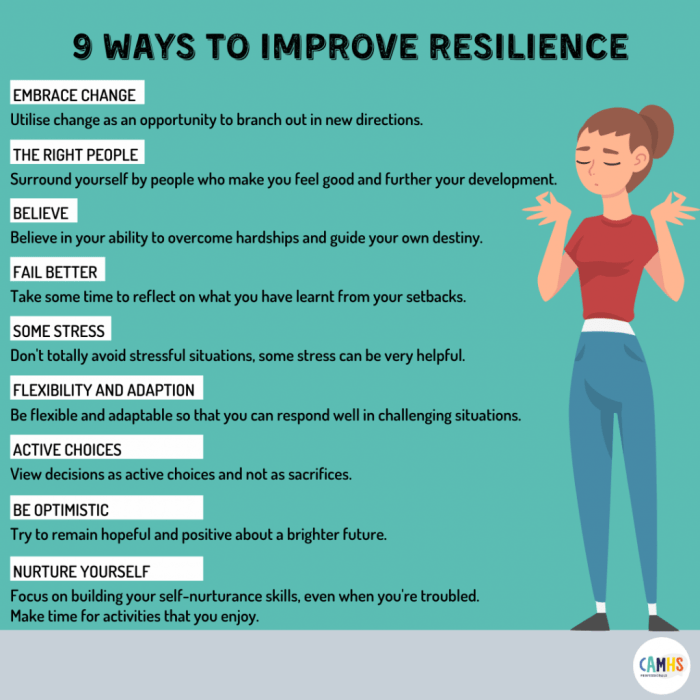
Building a supportive community involves understanding and addressing the specific challenges individuals face. This requires a multifaceted approach that considers both individual needs and community resources. Recognizing and responding to these challenges is crucial for fostering mental resilience and creating a truly supportive environment.
Common Mental Health Challenges and Support Strategies
Mental health challenges can manifest in various ways, affecting individuals differently. Understanding these challenges and providing tailored support is essential for promoting well-being. The table below highlights common mental health challenges and corresponding support strategies.
| Mental Health Challenge | Support Strategies |
|---|---|
| Anxiety |
|
| Depression |
|
| Trauma |
|
| Substance Abuse |
|
| Suicide Prevention |
|
Accessing Resources and Support
Individuals experiencing mental health issues have access to various resources and support systems. Knowing where to find help and how to access it is crucial for their well-being.
- Mental Health Professionals:Therapists, counselors, and psychiatrists provide professional support and treatment for a range of mental health challenges.
- Support Groups:Groups offer a safe space for individuals to connect with others facing similar challenges, share experiences, and find support.
- Crisis Hotlines:Hotlines provide immediate support and guidance during mental health crises, offering a lifeline for individuals in distress.
- Community Organizations:Local organizations often offer resources, programs, and support services for individuals with mental health issues.
- Online Resources:Websites and online communities provide information, support, and resources for individuals struggling with mental health challenges.
Stories of Resilience
Many individuals have overcome mental health challenges with the support of their communities. Sharing these stories can inspire hope, reduce stigma, and demonstrate the power of community support.
“I was struggling with anxiety and depression, and I felt completely alone. But then I found a support group, and it changed everything. Connecting with others who understood what I was going through gave me the strength to keep going.”
Sarah, a member of a mental health support group.
“After losing my job, I fell into a deep depression. My community rallied around me, offering support and encouragement. They helped me find new opportunities and rediscover my passion.”
John, a community member who received support during a challenging time.
Community-Based Interventions
Community-based interventions play a crucial role in promoting mental resilience by reaching individuals within their natural environments, fostering a sense of belonging, and providing accessible support. These interventions aim to address mental health concerns at a grassroots level, empowering individuals and communities to take ownership of their well-being.
Examples of Successful Community Programs
Community programs have proven effective in addressing mental health concerns. They often focus on specific populations or issues, providing tailored support and resources.
- Peer Support Groups:These groups connect individuals with shared experiences, fostering a sense of community and reducing isolation. Examples include support groups for individuals with depression, anxiety, or substance abuse issues. These groups offer a safe space for members to share their experiences, learn coping mechanisms, and receive emotional support from peers who understand their struggles.
- Mental Health First Aid Training:This program equips individuals with the knowledge and skills to recognize signs of mental health distress and provide initial support. By training community members, organizations can create a network of individuals who can offer assistance and guide individuals towards appropriate resources.
This training empowers community members to intervene early and promote help-seeking behaviors.
- Community-Based Mental Health Services:These services provide accessible and culturally sensitive mental health care within the community. This can include drop-in centers, mobile clinics, and outreach programs that bring mental health services directly to individuals in need. These services aim to reduce barriers to accessing care, such as transportation, stigma, and financial constraints.
Collaboration Between Community Organizations and Mental Health Professionals
Effective community-based interventions rely on strong partnerships between community organizations and mental health professionals.
- Shared Expertise:Community organizations often have deep understanding of local needs and resources, while mental health professionals provide clinical expertise and evidence-based interventions. This collaborative approach ensures that interventions are culturally appropriate, tailored to local needs, and grounded in professional knowledge.
- Integrated Services:Collaboration allows for the integration of mental health services within existing community programs, such as schools, workplaces, and faith-based organizations. This integration reduces stigma and makes mental health support more accessible to individuals in need.
- Community Engagement:Collaboration promotes community engagement in mental health initiatives, fostering a sense of ownership and responsibility for mental well-being. This can include involving community members in the planning, implementation, and evaluation of interventions, ensuring that they are relevant and responsive to local needs.
Measuring Impact and Sustainability
It is crucial to evaluate the effectiveness of community support strategies and ensure their long-term sustainability. By tracking key metrics and implementing strategies to maintain program longevity, communities can maximize their impact on mental well-being.
Key Metrics for Evaluating Effectiveness
Evaluating the effectiveness of community support strategies requires identifying and tracking relevant metrics. These metrics provide insights into program reach, impact on mental health, and overall effectiveness.
- Participation Rates:Track the number of individuals participating in programs and initiatives. This metric indicates the program’s reach and accessibility within the community.
- Mental Health Outcomes:Assess changes in mental health indicators such as stress levels, anxiety, depression, and overall well-being among participants. This can be done through surveys, assessments, or interviews.
- Program Satisfaction:Gather feedback from participants to understand their satisfaction with the program’s content, delivery, and impact. This can be achieved through surveys or focus groups.
- Community Engagement:Monitor the level of community involvement in program planning, implementation, and evaluation. This indicates the program’s relevance and responsiveness to community needs.
- Cost-Effectiveness:Analyze the program’s costs and benefits to determine its financial sustainability and efficiency. This helps prioritize resource allocation and maximize impact.
Strategies for Ensuring Sustainability
Long-term sustainability is essential for maximizing the impact of community support initiatives. By implementing strategies to ensure program longevity, communities can foster a culture of mental well-being and support for years to come.
- Strong Partnerships:Cultivate partnerships with local organizations, businesses, and government agencies to secure funding, resources, and expertise. These collaborations can enhance program reach and sustainability.
- Community Ownership:Encourage community involvement in program planning, implementation, and evaluation. This fosters a sense of ownership and commitment to the initiative’s success.
- Sustainable Funding Models:Explore diverse funding sources beyond grants and donations, such as social enterprises, fundraising events, or partnerships with local businesses. This ensures financial stability and reduces reliance on external funding.
- Program Evaluation and Adaptation:Regularly evaluate program effectiveness and adapt strategies based on feedback and changing community needs. This ensures program relevance and responsiveness to evolving challenges.
- Capacity Building:Train community members to deliver program components and support others. This fosters self-sufficiency and promotes a culture of mental well-being within the community.
Examples of Successful Community Programs
Numerous community programs have demonstrated lasting impact on mental well-being. These programs serve as models for implementing effective and sustainable initiatives.
- The National Alliance on Mental Illness (NAMI):NAMI is a national grassroots organization that provides support, education, and advocacy for individuals with mental illness and their families. NAMI’s programs have been instrumental in reducing stigma and promoting mental health awareness across the country.
- The Jed Foundation:The Jed Foundation focuses on preventing suicide and promoting mental health among young adults. The organization’s programs provide mental health training for educators, students, and families, empowering them to recognize and address mental health challenges.
- The Trevor Project:The Trevor Project is a national organization that provides crisis intervention and suicide prevention services to LGBTQ youth. The Trevor Project’s 24/7 hotline and online resources have saved countless lives and provided critical support to vulnerable youth.
Summary

By implementing these strategies, communities can create a culture of support and resilience, fostering a sense of belonging and empowering individuals to navigate life’s challenges. Together, we can build stronger, healthier communities where everyone has the opportunity to thrive.
FAQ Insights
What are some specific examples of community initiatives that promote mental well-being?
Examples include mental health awareness campaigns, support groups for individuals facing specific challenges, peer-to-peer mentorship programs, and community gardens that promote social interaction and relaxation.
How can communities address the stigma associated with mental health?
By promoting open dialogue, educating the public about mental health conditions, and celebrating stories of recovery, communities can help reduce stigma and create a more accepting environment.
What role do schools play in fostering mental resilience?
Schools can implement programs that teach emotional regulation, stress management, and conflict resolution skills. They can also provide access to mental health services and create a supportive environment for students.


More Stories