Stress Management Techniques
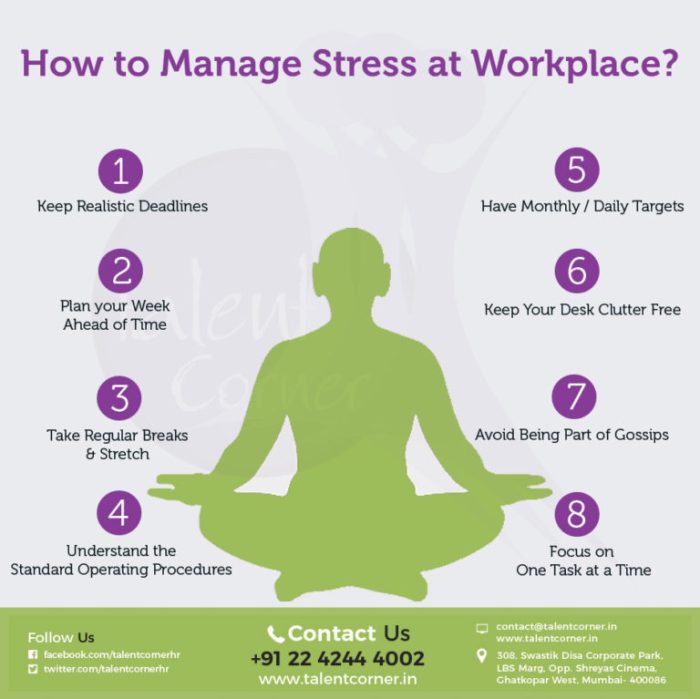
Workplace stress management techniques – Workplace stress can have a significant impact on an individual’s well-being and productivity. It is essential to employ effective stress management techniques to cope with the demands of a busy work environment.
Identifying Triggers
One of the first steps in managing workplace stress is identifying the triggers that contribute to your stress levels. This could be tight deadlines, a heavy workload, or conflicts with colleagues.
Time Management
Effective time management is crucial in reducing stress at work. Prioritize tasks, create a schedule, and break down large projects into smaller, manageable steps to avoid feeling overwhelmed.
Healthy Lifestyle Choices
Engaging in regular physical exercise, maintaining a balanced diet, and getting an adequate amount of sleep can help reduce stress levels. It is essential to take care of your physical well-being to better cope with work-related stress.
Mindfulness and Relaxation Techniques
Practicing mindfulness, deep breathing exercises, or meditation can help calm the mind and reduce stress. Taking short breaks throughout the day to relax and recharge can also be beneficial.
Seeking Support
Don’t hesitate to seek support from colleagues, friends, or a professional counselor if work stress becomes overwhelming. Talking about your feelings and seeking guidance can provide valuable insights and coping strategies.
Personalized Stress Management Plans
Developing a personalized stress management plan tailored to your specific needs and preferences is essential. What works for one person may not work for another, so it is crucial to experiment with different techniques and find what best helps you manage workplace stress.
Healthy Lifestyle Practices: Workplace Stress Management Techniques
Maintaining a healthy lifestyle is crucial in effectively managing workplace stress. When our bodies are nourished and active, we are better equipped to handle the demands and pressures of our jobs.
Healthy eating habits play a significant role in reducing stress levels at work. Consuming a balanced diet rich in fruits, vegetables, whole grains, and lean proteins can provide the necessary nutrients to support our physical and mental well-being. Avoiding excessive caffeine, sugar, and processed foods can help stabilize mood and energy levels throughout the day.
Incorporating Physical Activity
Regular physical activity is key in combating stress in the workplace. Exercise releases endorphins, which are known as “feel-good” hormones that can improve mood and reduce feelings of anxiety and stress. Here are some tips on how to incorporate physical activity into your daily routine:
- Take short breaks to stretch or go for a quick walk during the workday.
- Schedule regular workout sessions before or after work to help you unwind and recharge.
- Choose activities that you enjoy, whether it’s yoga, running, dancing, or any form of exercise that brings you joy.
- Involve your colleagues in physical activities to create a supportive and motivating environment.
Medical Innovations for Stress Management
In the fast-paced professional environments of today, medical innovations play a crucial role in helping employees manage and cope with stress effectively. These advancements leverage technology to provide personalized solutions for stress management.
Wearable Devices and Apps for Stress Monitoring
Wearable devices such as smartwatches and fitness trackers have become increasingly popular for monitoring stress levels in real-time. These devices track metrics like heart rate variability, sleep patterns, and physical activity to provide insights into the user’s stress levels throughout the day. Paired with specialized apps, these wearables offer personalized recommendations and interventions to help individuals manage stress more effectively.
Telemedicine Support for Stress Management
Telemedicine platforms have revolutionized access to healthcare services, including mental health support for stress management. Employees can now connect with healthcare professionals remotely through video consultations and virtual therapy sessions. This convenient and confidential approach to seeking support ensures that employees can access the help they need to manage stress effectively, even from the comfort of their workplace or home.
Nutritional Supplements for Stress Relief
When it comes to managing stress in high-pressure work environments, incorporating nutritional supplements can be a beneficial addition to your stress management plan. Certain vitamins and minerals have been known to help reduce stress levels and promote overall well-being.
Common Nutritional Supplements for Stress Relief
- Omega-3 fatty acids: Found in fish oil supplements, omega-3 fatty acids have been shown to reduce anxiety and promote brain health, which can help in stress management.
- Vitamin B complex: B vitamins, such as B6 and B12, play a crucial role in maintaining nerve function and producing neurotransmitters that regulate mood. They can help in reducing stress and improving energy levels.
- Magnesium: Magnesium is essential for relaxation and stress reduction, as it helps to regulate the nervous system and promote calmness. It can be taken as a supplement or found in foods like nuts, seeds, and leafy greens.
Effectiveness of Vitamins and Minerals in Stress Reduction
Research has shown that vitamins and minerals play a vital role in reducing stress and improving overall well-being. For example, vitamin B complex has been linked to lower levels of stress and anxiety, while magnesium helps to relax muscles and calm the mind. It is important to ensure you are getting an adequate intake of these nutrients to support your body’s stress response.
Consulting Healthcare Professionals for Supplement Incorporation, Workplace stress management techniques
Before incorporating any nutritional supplements into your stress management plan, it is crucial to consult with a healthcare professional. They can help determine the right supplements for your individual needs and ensure they do not interact with any medications you may be taking. Your healthcare provider can also advise on the correct dosage and monitor your progress to ensure the supplements are effective in reducing your stress levels.
Fitness Routine and Stress Reduction
Maintaining a consistent fitness routine is essential for managing workplace stress as it helps in reducing tension, improving mood, and increasing overall well-being. Regular physical activity can also boost self-confidence and improve sleep quality, contributing to better stress management.
Benefits of Exercise for Stress Reduction
- Exercise releases endorphins, which are known as “feel-good” hormones, helping to alleviate stress and anxiety.
- Physical activity promotes better blood circulation, supplying more oxygen to the brain and improving cognitive function, which can aid in dealing with stressors at work.
- Engaging in regular exercise can provide a healthy outlet for pent-up emotions and frustrations, reducing the impact of stress on mental health.
Effective Exercises for Stress Reduction
- Cardiovascular activities like running, cycling, or swimming can help in releasing tension and improving mood.
- Yoga and Pilates are effective in reducing stress levels by combining physical movement with mindfulness and deep breathing techniques.
- Strength training exercises, such as weightlifting or bodyweight workouts, can also help in relieving stress by promoting a sense of accomplishment and physical strength.
Role of Physical Fitness in Workplace Stress Management
Regular physical fitness not only helps in reducing stress but also plays a crucial role in promoting mental well-being and resilience in the workplace. By incorporating exercise into daily routine, individuals can build a stronger physical and mental foundation to cope with work-related challenges and pressure effectively.
Importance of Health Screenings
Regular health screenings play a crucial role in identifying stress-related health issues early on, allowing for timely intervention and management. By monitoring key health indicators, individuals can address potential problems before they escalate, leading to better health outcomes in the long run.
Proactive Approach to Managing Stress
Health screenings contribute to a proactive approach to managing stress by providing valuable insights into the body’s overall health status. Early detection of conditions such as hypertension, diabetes, and cardiovascular issues can help individuals make necessary lifestyle changes and seek appropriate medical treatment to prevent complications associated with chronic stress.
- Regular blood pressure checks can help monitor the impact of stress on cardiovascular health and identify any abnormalities that may require intervention.
- Screenings for blood sugar levels can detect early signs of diabetes, a condition that can be exacerbated by chronic stress and poor lifestyle habits.
- Cholesterol screenings can reveal underlying risk factors for heart disease, which may be influenced by stress levels and overall well-being.
Recommended Frequency of Health Screenings
Individuals in high-stress jobs are advised to undergo health screenings more frequently to ensure early detection of stress-related health issues. Depending on age, gender, family history, and lifestyle factors, the following screenings are typically recommended:
– Annual blood pressure checks for individuals above the age of 40 or those with a family history of hypertension.
– Bi-annual blood sugar screenings for individuals at risk of diabetes or with a sedentary lifestyle.
– Cholesterol screenings every 5 years for adults over the age of 20, with more frequent tests for those at higher risk of heart disease.
Disease Prevention Strategies
Implementing disease prevention strategies is crucial to reducing the impact of stress on overall health. Chronic stress can lead to increased susceptibility to various diseases, making it essential to incorporate preventive practices into daily routines for better stress management.
Importance of Physical Activity
- Regular exercise can help boost the immune system and reduce the risk of developing chronic diseases.
- Engaging in physical activity releases endorphins, which are natural mood lifters and stress reducers.
- Try to incorporate at least 30 minutes of moderate exercise into your daily routine, such as walking, jogging, or yoga.
Healthy Eating Habits
- Eating a balanced diet rich in fruits, vegetables, whole grains, and lean proteins can provide essential nutrients to support the immune system.
- Avoiding excessive consumption of processed foods, sugary snacks, and high-fat meals can help maintain a healthy weight and reduce the risk of heart disease and diabetes.
- Stay hydrated by drinking an adequate amount of water throughout the day to support overall health and well-being.
Stress Management Techniques
- Practicing relaxation techniques such as deep breathing, meditation, or mindfulness can help reduce stress levels and promote emotional well-being.
- Setting boundaries, prioritizing tasks, and seeking social support can also play a significant role in managing stress and preventing its negative effects on health.
- Consider incorporating hobbies, leisure activities, or self-care practices into your daily routine to help unwind and relax.
Sleep Hygiene Practices
Good sleep hygiene plays a crucial role in managing workplace stress and promoting mental clarity. By establishing healthy sleep habits, individuals can improve their overall well-being and enhance their ability to cope with stress effectively.
Creating a Conducive Sleep Environment
- Avoid exposure to screens before bedtime, as the blue light emitted can disrupt the production of melatonin, a hormone that regulates sleep.
- Ensure your bedroom is dark, quiet, and at a comfortable temperature to promote uninterrupted sleep.
- Invest in a good quality mattress and pillows to support a restful night’s sleep.
- Establish a regular bedtime routine to signal to your body that it is time to wind down and prepare for rest.
Impact of Sleep Deprivation on Stress Levels
Sleep deprivation can significantly increase stress levels and impair cognitive function, leading to decreased productivity at work. Chronic sleep loss can also weaken the immune system, making individuals more susceptible to illnesses and further exacerbating stress. It is imperative to prioritize adequate sleep to mitigate the negative effects of stress on both physical and mental health.
Mental Clarity Techniques
Enhancing mental clarity and focus in high-stress work environments is crucial for productivity and overall well-being. By incorporating mindfulness practices, meditation, or relaxation techniques into your daily routine, you can reduce stress levels and improve cognitive function. Here are some examples of mental clarity exercises that you can easily implement at work:
Mindfulness Meditation
- Start your day with a short mindfulness meditation session to set a positive tone for the day.
- Practice deep breathing exercises throughout the day to stay grounded and focused.
- Take short breaks to engage in mindful walking, paying attention to your surroundings and sensations.
Visualization Techniques
- Visualize a peaceful place or scenario to help calm your mind and reduce stress during busy work hours.
- Create a vision board with images that inspire and motivate you, promoting mental clarity and goal setting.
- Use guided imagery exercises to imagine yourself successfully completing tasks and projects, boosting confidence and focus.
Progressive Muscle Relaxation
- Practice progressive muscle relaxation by tensing and then relaxing different muscle groups in your body, releasing tension and promoting relaxation.
- Incorporate mini relaxation sessions throughout the day by focusing on one muscle group at a time, such as your shoulders or neck.
- Use relaxation techniques before important meetings or presentations to calm your nerves and enhance mental clarity.
Hydration Importance for Stress Management
Proper hydration plays a crucial role in maintaining optimal cognitive function and managing stress levels. Dehydration can have a significant impact on workplace performance and stress resilience, affecting concentration, mood, and overall well-being. It is essential to stay adequately hydrated throughout the workday to improve stress management and ensure peak productivity.
Tips for Staying Hydrated
- Keep a water bottle at your desk and take regular sips throughout the day.
- Set reminders on your phone or computer to drink water at regular intervals.
- Opt for herbal teas or infused water for added hydration and flavor.
- Avoid excessive consumption of caffeine and sugary drinks, as they can contribute to dehydration.
- Eat water-rich fruits and vegetables like cucumber, watermelon, and oranges to increase your fluid intake.
FAQ Guide
How important is it to create personalized stress management plans?
Personalized stress management plans are crucial as they address individual needs and preferences, ensuring a more tailored approach to combating workplace stress.
Can wearable devices effectively help in managing stress levels at work?
Wearable devices can be beneficial in monitoring stress levels and promoting mindfulness, offering individuals real-time data to make informed decisions about stress management.
Are there specific exercises that are more effective in reducing stress levels?
Exercises like yoga, meditation, and deep breathing techniques have been found to be particularly effective in reducing stress and promoting relaxation in high-pressure work environments.
How does dehydration impact stress resilience in the workplace?
Dehydration can lead to cognitive impairment and increased stress levels, affecting overall performance and productivity at work. It is essential to stay hydrated to maintain optimal stress management.
What role does mental clarity play in managing workplace stress?
Mental clarity techniques such as mindfulness practices and relaxation exercises can enhance focus and cognitive function, ultimately aiding in stress reduction and promoting overall well-being in professional settings.


More Stories
Disease prevention through regular health check-ups: Vital for overall well-being
Top multivitamin supplements for daily health – The Ultimate Guide